
Criminal Court Records in Colfax County
A criminal court record is the court case file opened once a criminal matter is filed. It is broader than an arrest entry and broader than the first charge listing. In Colfax County, the file can include a complaint, information, indictment, amended charges, arraignment entry, bond order, motions, hearing notices, plea agreement, verdict, disposition, sentencing order, probation conditions, and appeal entries. A separate court charge record focuses more narrowly on the filed charges after arrest.
Felony criminal cases are handled in District Court if bound over or indicted. Magistrate Court can handle misdemeanors, DWI/DUI, traffic, and felony preliminary hearings. Municipal Courts in Raton and Springer handle petty misdemeanors, DWI/DUI, traffic violations, and municipal ordinance violations. This means the same defendant name may produce records in more than one venue if different cases or stages are involved.
The New Mexico Administrative Office of District Attorneys lists the Eighth Judicial District Attorney, which serves Colfax, Taos, and Union counties.
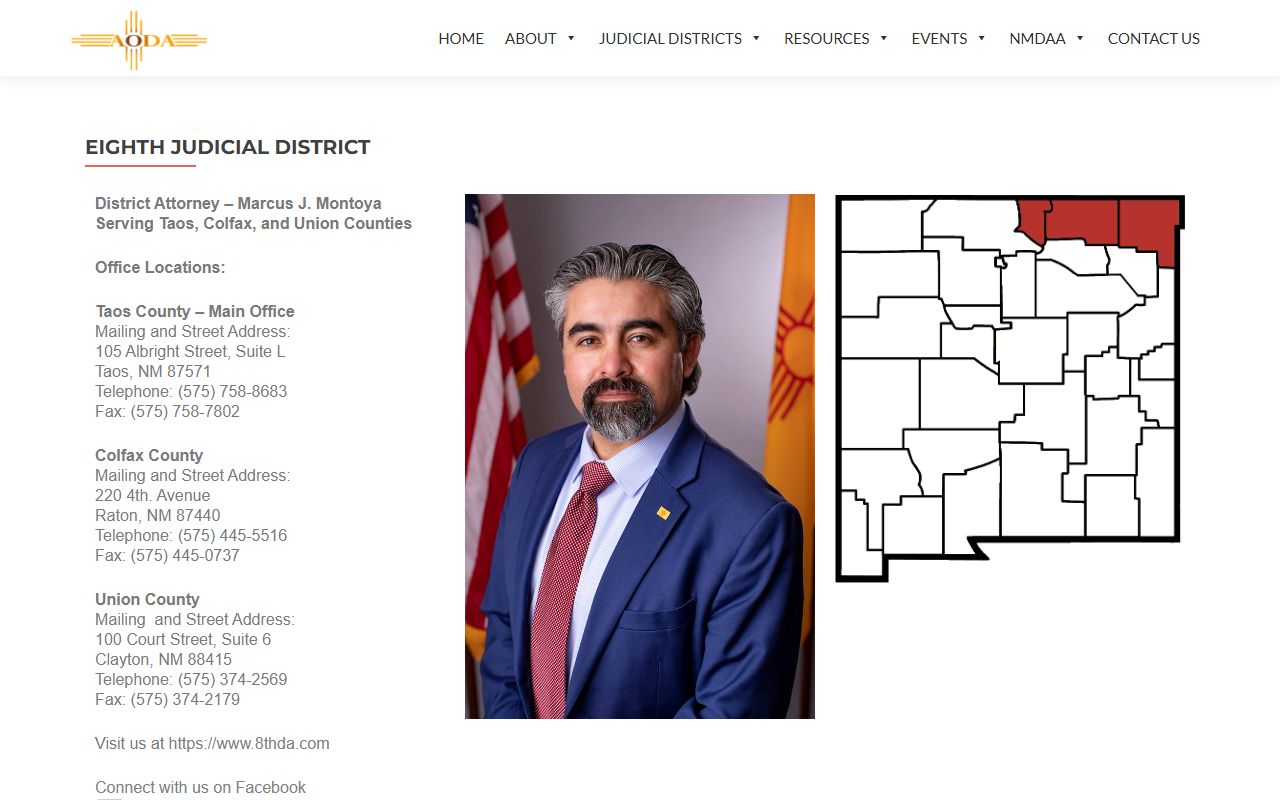
The District Attorney connection matters because prosecutors file or pursue criminal charges, while the official court record is maintained by the court where the criminal case is filed.
How to Search Colfax County Criminal Court Records
Start with New Mexico Case Lookup for public criminal case information. The system covers appellate, District, Magistrate, Metropolitan, and Municipal Court records after accepting the disclaimer. Use Name Search for a defendant name, Case Number Search when a number is known, or DWI Search for DWI-specific lookup. Case Lookup can show public case metadata and docket activity, but it does not provide documents.
- Open New Mexico Case Lookup and accept the State Judiciary disclaimer.
- Search by defendant name, case number, or DWI tab depending on the information available.
- Narrow by court type, court location, case category, and date range when the first results are too broad.
- For District Court criminal cases, look for Colfax District Court location 809 - Raton and case-number patterns such as D-809-CR-year-sequence.
- Request official documents, certified copies, older files, or corrections from the court where the criminal case was filed.
Odyssey Public Access is another official channel, especially for public case search and fine or fee payment where available. Its notice warns that electronic payment resolves only financial obligations and does not resolve active warrants or other court-ordered conditions. For active-warrant issues, check the issuing court or Sheriff's Office rather than assuming payment cleared the matter.
re:SearchNM is the registered-user system for Odyssey case information and documents by user profile. Secured Odyssey Public Access is also login-based and is separate from no-registration public Case Lookup. If the goal is a complete file, a certified order, a sentencing document, or a filed motion, a public search result should be followed by a court request or eligible registered access.
Stages of a Criminal Case
Criminal records develop in stages. An arrest or citation may occur before the formal court case is complete. The District Attorney may file a complaint, information, indictment, amended charge, dismissal, plea, or sentencing document. Felonies may appear first in Magistrate Court for preliminary proceedings before moving to District Court. Misdemeanor, DWI, traffic, and ordinance cases may remain in Magistrate or Municipal Court depending on the charging agency and jurisdiction.
Case flow: Charges Filed › Arraignment › Pretrial / Motions › Plea or Trial › Disposition › Sentencing
| Stage | What Happens |
|---|---|
| Charges Filed | The prosecutor or charging authority files the case in the proper court; the docket begins to identify charges, case number, and court. |
| Arraignment | The defendant is advised of charges and enters a plea such as guilty, not guilty, or no contest where applicable. |
| Pretrial / Motions | The court may record bond conditions, motions, continuances, discovery disputes, suppression issues, or scheduling orders. |
| Plea or Trial | The case may resolve by plea agreement or proceed to trial, with verdict or plea information reflected in the record. |
| Disposition | The case or charge outcome is recorded, including dismissal, conviction, acquittal, deferred outcome, or other final action when public. |
| Sentencing | The court records jail or prison time, probation, fines, fees, conditions, treatment, or other sentence terms when ordered. |
What a Colfax County Criminal Court Record Shows
Criminal case records are fielded around identity, court location, charges, hearings, and outcomes. Case Lookup supports filters for party name, driver's license, date of birth, court type, court location, case category, filing date, hearing date, and result limit. Public records may omit Social Security numbers, addresses, juvenile criminal cases, and Family Violence Protection Act Order of Protection matters. A docket may show hearing information while documents remain unavailable online.
| Field | What It Shows |
|---|---|
| Case Number | The criminal case identifier, including District Court examples such as D-809-CR-year-sequence. |
| Defendant | The person charged in the criminal case; public views may limit identifying details. |
| Charges | The filed criminal allegations, which may differ from arrest or jail booking wording. |
| Court and Location | The filing venue, such as Colfax District Court, Raton Magistrate Court, Springer Magistrate Court, or a Municipal Court. |
| Plea | The defendant's formal response, such as guilty, not guilty, or no contest if recorded publicly. |
| Disposition | The outcome of the charge or case, such as dismissal, conviction, acquittal, or other court action. |
| Sentence | Jail, prison, probation, fines, treatment, compliance terms, or other court-ordered consequences when available. |
Charges vs. Convictions
A charge is an accusation filed in court. A conviction is an outcome after a guilty plea, no contest plea where accepted, or guilty verdict. A Colfax County criminal court record can show charges that were dismissed, amended, reduced, deferred, or resolved without a conviction. It can also show convictions that resulted in sentencing. This is why a criminal case search should not treat the presence of a charge as proof that the person was convicted.
| Charge | Conviction | |
|---|---|---|
| Stage | Accusation filed in a court case | Final or current outcome after plea or verdict |
| Record Meaning | Shows what was alleged or amended | Shows the court found or accepted guilt for an offense |
| Public Record | Often public unless sealed, expunged, juvenile, protected, or otherwise restricted | Often public unless sealed, expunged, protected, or restricted by law or order |
The distinction also separates court records from state criminal-history repository records. The New Mexico Department of Public Safety Law Enforcement Records Bureau maintains the state central criminal-history repository.
DPS records may concern arrest-record information and background-check history, while the court file explains what happened in the criminal case after filing.
Reading Dispositions and Sentences
Disposition means the outcome of a case or charge. A record may show guilty, not guilty, dismissed, acquitted, plea, deferred outcome, sentence imposed, probation condition, or appeal activity, depending on the case and system. A dismissed charge is not the same as a conviction, and a deferred or amended case should be read with the specific order or docket text rather than guessed from a short result line.
Sentencing information can include incarceration, probation, fines, fees, treatment, compliance conditions, or other court orders. Odyssey Public Access may support payment of financial obligations, but the public notice says payment does not resolve warrants or other court conditions. If the sentence involves custody, use court records for the sentence and the jail or state correctional source for current custody status; inmate custody records are separate from the court case file.
Sealed vs. Expunged Records
Sealed records are hidden from ordinary public access by rule or written court order. Expungement is the New Mexico process that removes qualifying arrest, court, and public records from public access as allowed by statute and the order. New Mexico Courts provide separate expungement packets for convictions and for release without conviction. The conviction packet states the petition must be filed in the District Court where the arrest and criminal records originated, even when the underlying case was filed in municipal or metropolitan court or dismissed before a prosecutor filed a court case.
| Sealed | Expunged | |
|---|---|---|
| Visibility | Hidden from ordinary public lookup | Removed from public access to the extent allowed by statute and order |
| Legal Basis | Court rule, statute, or written court order | Criminal Record Expungement Act petition and court order when eligible |
| Colfax Filing Point | Usually the court that controls the restricted case | Usually Eighth Judicial District Court in Colfax County for qualifying Colfax-origin records |
Public Access to Criminal Court Records
New Mexico Supreme Court Rule 1-079 NMRA provides that most court records are subject to public access, but access may be limited by rule or written court order. IPRA, including NMSA 1978, Section 14-2-1, generally gives the public a right to inspect public records unless an exception applies. NMSA 1978, Section 14-2-8 covers written request procedure, and Section 14-2-1.1 protects personal identifier information. These rules explain why criminal case metadata may be public while some documents, identifiers, or case categories remain restricted.
Key Statutes:
NMSA 1978, Section 14-2-1 - public records are generally open for inspection unless a specific exception applies.
Rule 1-079 NMRA - most court records are public, but rules and court orders can restrict access.
Background Check Considerations
A criminal court records search is not the same as an official background check. Court records show filed case activity and outcomes in the court system. DPS maintains the New Mexico central criminal-history repository for arrest-record information involving felony arrests, misdemeanors punishable by six months or more, and DWI arrests. Employers, landlords, licensing bodies, and other regulated users may have legal duties that are not satisfied by a casual public court search.
The New Mexico DPS public records center is the official request channel shown in the research for DPS public records.
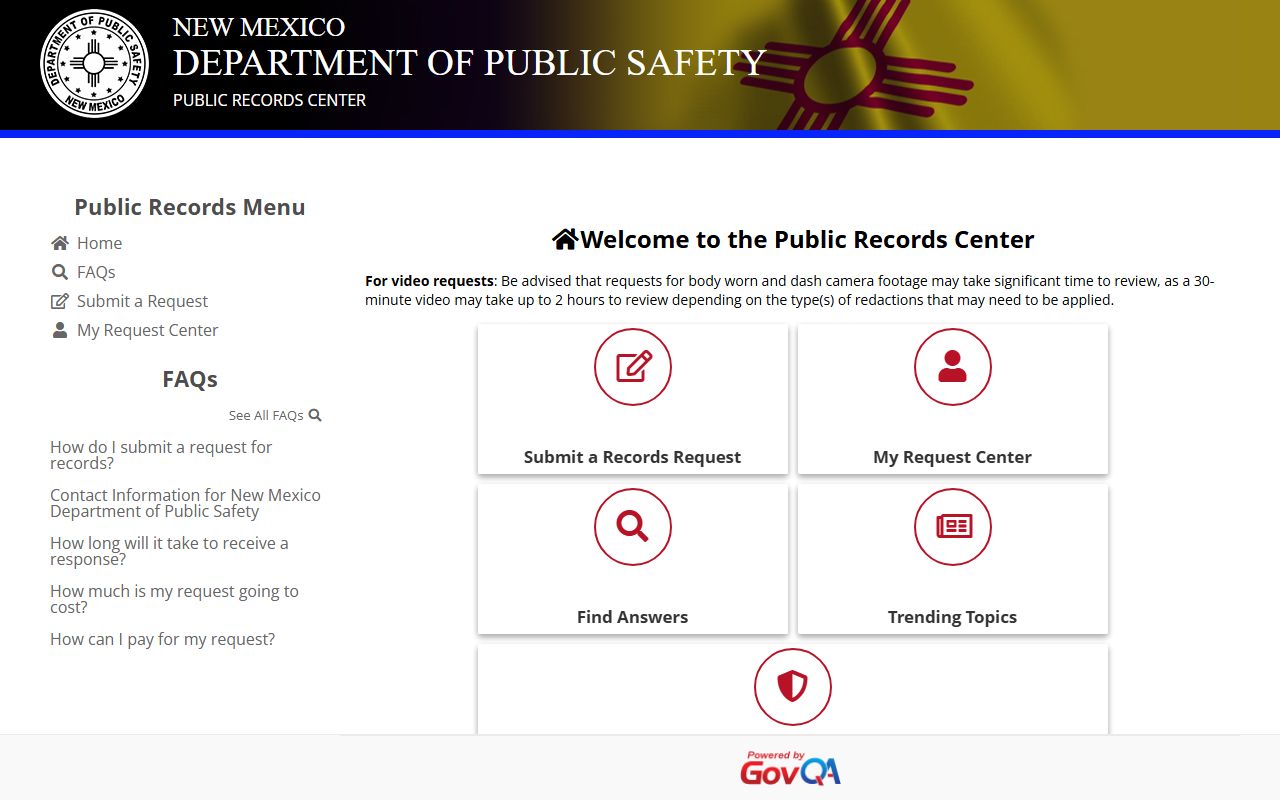
Use the DPS request channel when the sought record is a law-enforcement or criminal-history repository record rather than a Colfax County court case file.
Important: This website is not a consumer reporting agency and is not for FCRA-regulated screening decisions.
Restricted Criminal Court Records in Colfax County
New Mexico Judiciary no longer displays juvenile criminal cases in Case Lookup, effective July 1, 2007. Family Violence Protection Act Order of Protection cases are also not displayed in Case Lookup, effective July 1, 2008. Mental health proceedings, adoption matters, sealed records, expunged records, and cases restricted by order are not ordinary public lookup records. Personal identifiers such as Social Security numbers, address information, taxpayer IDs, and financial account data may be redacted or withheld.
When a criminal result is missing, the reason may be a restriction, an older record, a different court, a municipal record limitation, a sealed or expunged matter, or a search-input problem. The official next step is to contact the filing court or use the New Mexico Courts IPRA form with the correct Eighth District court location. For Colfax County, the filing court may be District Court in Raton, Raton Magistrate Court, Springer Magistrate Court, Raton Municipal Court, or Springer Municipal Court depending on the case.